Digital Transformation in Healthcare

Vasion Team
March 9, 2026
15 mins
In some ways, the healthcare industry can be considered a late bloomer when it comes to digital transformation. However, the industry as a whole has made some remarkable progress in a relatively short amount of time. From its humble beginnings of moving paper records to an electronic format to incorporating artificial intelligence (AI) into the mainstream of disease detection, diagnosis, therapies, and prevention, healthcare is becoming more digital and providing patients with a broader range of healthcare choices.
What’s Driving the Healthcare Transformation?
There are many motivators for the healthcare industry’s digital transformation. One of the primary drivers is economical. Healthcare costs have been on a steady upward trajectory for many years. In response to this trend, the industry is partnering with technology to steer toward a more patient-first, lower-cost healthcare paradigm. Leading the way is value-based care. By definition, value-based care is a shift from a fee-for-service to an outcome-focused payment model. This more economical approach rewards providers based on the quality, rather than the quantity of care.
Changes in regulatory oversight and government agency modernization efforts are also impacting healthcare services. For example, in 2025, the U.S. Food and Drug Administration (FDA) launched its Technology-Enabled Meaningful Patient Outcomes (TEMPO) program. The program, in collaboration with the Centers for Medicare and Medicaid Services (CMS), is testing a new payment option that emphasizes patient outcomes, enabling clinicians to offer innovative technology-support care to improve patients’ health and prevent and manage chronic disease.
In another vein, regulatory agencies have ramped up approvals of more modernized medical devices and therapies. The FDA currently regulates digitally-delivered treatments that meet the definition of software as a medical device (SaMD). Some of the intended purposes for this technology include diagnosis, mitigation, treatment, or prevention of disease. The FDA is seeing more innovative devices and therapies petitioning for regulatory approval. Providers and healthcare facilities are expected to follow suit by using these technologies in patient care.
Healthcare’s Path to Digital Transformation
The healthcare industry is undergoing a significant transformation by adopting smarter, connected, and innovative technologies for optimizing productivity while improving the efficiency and accuracy of patient care. The industry has experienced tremendous growth through adopting modern technology to advance the healthcare system. The transition had a slow start, but technology adoption is occurring at a more rapid pace.
Electronic Records: The Onset of Healthcare Transformation
Digitization in healthcare began with the massive task of scanning historical medical records and storing them in electronic document management systems. Hospitals and clinics converted years of patient charts, lab reports, and physician notes into digital archives to view and share electronically.
In a similar fashion, organizations digitized materials, such as X-rays, CT scans, and pathology slides and stored them in Picture Archiving and Communication Systems (PACS). This digital medical imaging technology enables clinicians to access and compare images from different locations. Administrative documents, including consent forms, insurance claims, and referral letters, were also converted into electronic formats. Many healthcare organizations created digital libraries containing medical research, protocols, and best-practice guidelines for clinicians to reference on demand.
The Value of Electronic Health Records and Documents
Digitization presented immeasurable benefits across healthcare organizations. By transforming paper records into electronic health records (EHRs), providers gained faster access to patient histories across departments and care settings. This improved accessibility, supported continuity of care, and reduced the likelihood of redundant testing or overlooked medical information.
Overall, digitization frees up valuable facility space and lowers archival costs. More importantly, digital records are less prone to deterioration or loss than paper files, preserving vital health information for the long term.
Digitized datasets are also contributors to future innovation. Once information exists in an electronic format, it becomes easier to integrate into analytics systems that support things like population health management, quality improvement, and research.
Managing Healthcare Data
Now that the majority of health records are electronic, they’re easier to access, update, and use. However, the patient data in the records also runs the risk of getting into the wrong hands. The transition of paper records to electronic form made it necessary to monitor them more closely to ensure the integrity and security of EHRs throughout their life cycles.
Data Security
As healthcare becomes more digitized, cybersecurity grows increasingly critical. Patient data is highly valuable to cybercriminals, which means healthcare organizations are frequent targets for attacks. Information theft and ransomware incidents have disrupted clinical operations worldwide, leading to delayed treatments, compromised patient safety, and costly fines.
Insider threats also pose risks. Employees with access to sensitive information may misuse or inadvertently expose data. In addition, third-party vendors introduce new vulnerabilities when their systems are integrated with core healthcare networks.
To protect sensitive information, organizations must implement robust safeguards such as encryption, access controls, audit trails, and a Zero Trust Architecture that verifies every user and device before granting access. Ongoing risk assessments, employee training, and vendor oversight are essential for maintaining patient trust and ensuring compliance with privacy regulations.
Healthcare Regulatory Landscape
No discussion of data security in healthcare is complete without understanding the regulatory environment that governs it. The healthcare industry and global regulatory agencies have stepped up efforts to safeguard proprietary data. This data is largely overseen by multiple government entities and policies.
In the United States, the Health Insurance Portability and Accountability Act (HIPAA) remains the cornerstone of data protection and privacy for healthcare organizations. Any digital initiative involving patient information must align with HIPAA’s standards to ensure compliance, protect patient trust, and avoid significant financial penalties.
HIPAA compliance ensures that protected health information (PHI) is used, stored, and transmitted securely. HIPAA comprises several key rules that shape how healthcare organizations approach digital transformation and data management:
- Privacy Rule: This rule defines PHI and establishes safeguards for how it may be used or disclosed. It ensures that patients maintain control over their health information and that organizations use it only for authorized purposes.
- Security Rule: The HIPAA Security Rule sets administrative, physical, and technical safeguards that protect electronic public health information (ePHI) from unauthorized access or breaches. These safeguards include encryption, access controls, secure authentication, and continuous risk assessments.
- Breach Notification Rule: This rule requires healthcare entities and their business associates to report any data breach involving PHI. Notifications must be made to affected individuals, the Department of Health and Human Services (HHS), and, in certain cases, the media.
HIPAA is rigorously enforced, and violations can result in penalties of up to $1.5 million per violation category per year, in addition to potential reputation damage.
Impact of HIPAA on Digital Transformation Initiatives
HIPAA’s requirements have a direct influence on how healthcare organizations plan and execute digital transformation projects. Encryption is mandatory for data at rest and in transit, ensuring that PHI remains protected across all digital systems. Organizations must establish access controls and authentication mechanisms to confirm that only authorized users can view or modify patient data.
Organizations are also required to maintain audit trails that document every access or alteration of PHI. This transparency supports both compliance and accountability. Business Associate Agreements (BAAs) must be set up with any vendor or service provider that handles PHI on behalf of a healthcare entity, including cloud providers, telehealth platforms, and analytics vendors.
Another HIPAA compliance requirement is the completion of comprehensive risk assessments. Companies must conduct an accurate and thorough assessment of potential risks and vulnerabilities to the confidentiality, integrity, and availability of electronic protected health information. These assessments ensure that security vulnerabilities are identified, documented, and remediated before new systems go live.
Digital Transformation Enablers Under HIPAA
Although HIPAA imposes strict standards, it also provides a framework that supports innovation and advanced technologies when implemented correctly. For example:
- Telehealth is permitted under HIPAA when proper safeguards are in place, such as secure video conferencing and data encryption.
- Cloud computing is allowed as long as covered entities execute BAAs with providers that guarantee compliance.
- Mobile health applications can operate within HIPAA guidelines if designed with strong authentication, data minimization, and encryption controls.
- Remote patient monitoring technologies are supported, provided that device data is transmitted and stored securely.
The HIPAA guidelines are a necessary component of healthcare data management. However, they can also serve as a blueprint for safe and sustainable digital innovation. When organizations align technology investments with regulatory requirements, they can accelerate digital transformation while maintaining the trust and privacy of every patient.
This coincides with the FDA’s 21st Century Cures Act. This Act was designed to help accelerate medical product development and quickly bring new innovations and advances to patients who need them. The regulatory watchdog has an ongoing effort to modernize healthcare across the board, such as using real world evidence to speed the development and review of innovative medical products.
Data Management on a Global Scale
Europe’s healthcare sector operates under one of the world’s most comprehensive data protection frameworks. The General Data Protection Regulation (GDPR), implemented in 2018, was designed to safeguard personal data, enhance individual privacy rights, and create uniform standards for data processing across all European Union (EU) member states. It is overseen by the European Commission (EC) and remains a top priority of EU data protection law.
The GDPR ensures that organizations collecting, processing, or storing personal data handle it with transparency, accountability, and respect for individual rights. Unlike HIPAA, which applies specifically to healthcare in the United States, GDPR covers all industries but puts more emphasis on personal data, including health information. Its goal is to empower individuals to control their own data while requiring organizations to protect it through strict security and privacy standards.
Additionally, the regulation introduces several provisions that go beyond U.S. healthcare privacy laws. It includes a broad definition of personal data, encompassing any information related to an identifiable person, including genetic, biometric, and health-related data. Individuals are granted the right to be forgotten, which means they can request that their data is deleted. They also have the right to data portability, enabling them to transfer their data between service providers.
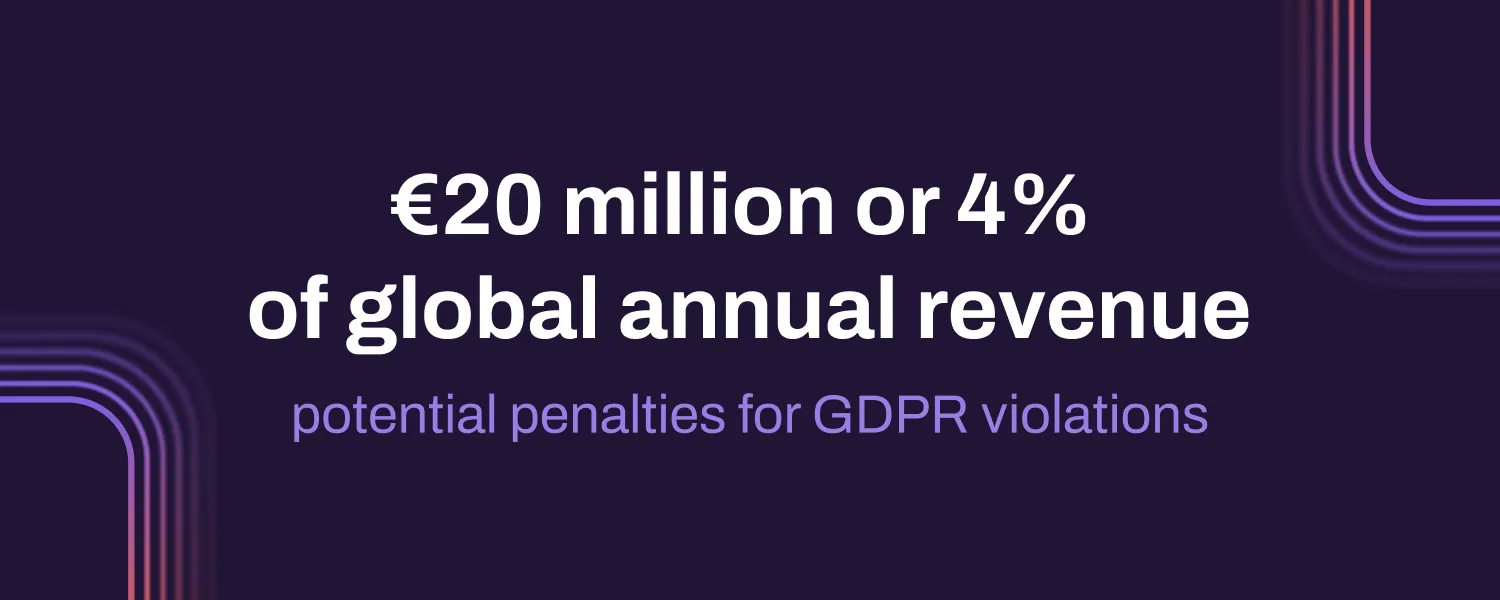
As part of the GDPR data protection efforts, healthcare organizations must conduct Data Protection Impact Assessments (DPIAs) to evaluate and mitigate risks before processing sensitive data. They are also required to appoint a Data Protection Officer (DPO). This person is in place specifically to ensure compliance with all relevant data protection laws, monitor specific data management processes, and train staff on data protection. Still, it is the responsibility of the entire company to comply with data protection laws. This is essential because penalties for violations are severe, reaching up to €20 million or 4% of global annual revenue, whichever is higher.
Under the GDPR, personal health information is in a “special category” of data, as outlined in Article 9 of the regulation, which requires agency consent for processing personal data. Healthcare providers must implement enhanced security measures, encryption, and strict access controls. According to Article 9, every organization that handles personal health information must have documentation on how data is collected, stored, and shared.
The GDPR also mandates data protection impact assessments for all high-risk processing activities, including digital diagnostics, remote monitoring, or artificial intelligence (AI) systems. This ensures that privacy risks are identified and mitigated at every stage.
Patient Rights and Cross-Border Care
The GDPR also complements broader EU regulations that protect patient rights and facilitate access to cross-border healthcare. For example, the Directive 2011/24/EU gives patients the right to receive treatment in other EU countries and requires mutual recognition of medical prescriptions. It also establishes European Reference Networks (ERN). These networks enable specialists in Europe to discuss cases of patients affected by rare, low-prevalence diseases providing advice on the appropriate diagnosis and treatment.
In conjunction with cross-border care, the European Parliament created the Professional Qualifications Directive. This ensures that healthcare professionals can have their medical credentials recognized across member states, which improves workforce mobility and addresses shortages. Together, these frameworks reinforce a unified European approach to healthcare access and quality.
Sharing EHRs in the EU
Europe is rolling out several new initiatives that will shape the future of digital healthcare. The European Health Data Space (EHDS) proposal aims to establish a framework for securely sharing electronic health records and research data across borders. The eIDAS Regulation facilitates a standardized system for secure cross-border transactions by establishing a framework for digital identity and authentication.
GDPR’s Impact on Digital Transformation
The GDPR’s stringent privacy and security rules significantly influence healthcare digital transformation strategies. Cross-border data transfer restrictions require organizations to carefully manage the flow of data between EU and non-EU systems. Therefore, healthcare organizations must deploy robust consent management systems to track patient permissions for data use.
Additionally, data minimization and privacy by design principles are mandatory. Systems must collect only the information necessary for a specific purpose and embed security into every phase of system development. These regulations establish a higher standard for transparency, accountability, and cybersecurity, ensuring that digital transformation in European healthcare advances without compromising patient privacy.
Document Automation
A common statement recited across the life sciences industry is “if it isn’t documented, it didn’t happen.” Healthcare organizations generate enormous amounts of documentation, and it all must be organized and accounted for. Clinical notes, lab reports, discharge summaries, consent forms, billing statements, and compliance records all form part of the administrative entity that keeps the system running. Managing these documents manually creates significant bottlenecks, increases the risk of human error, and exposes organizations to potential compliance violations.
The Challenge of Manual Document Management
Manual document workflows remain prevalent in healthcare, despite the widespread adoption of electronic health records. Staff often spend hours printing, scanning, and routing various other types of documents and patient information across departments. This slows down care coordination, introduces the risk of misplaced or incomplete records, and diverts time away from patient interaction. Manual processes also make it challenging to maintain consistent audit trails and security controls for PHI.
Automated Document Management
Document management automation transforms documentation tasks. Automation tools can extract and structure data from scanned documents and feed the data directly into clinical or administrative systems, eliminating the need for manual data entry.
Healthcare organizations have adopted automated document management systems to improve the speed and accuracy of documents such as discharge summaries, transfer forms, referral documentation, etc. that are pre-populated with all required elements for compliance and clinical accuracy. These features not only save time but also reduce transcription errors that can compromise patient safety.
Document automation solutions also include secure printing processes, ensuring that sensitive PHI is accessed only by authorized users. They support off-network printing for mobile or remote clinicians, using Zero Trust security models that authenticate users and devices before permitting output.
Cloud-based print management puts all aspects of enterprise printing into a secure cloud platform. This simplifies print management because printing tasks are all managed from one console. Furthermore, the security functionality of a serverless cloud-based solution protects against cybersecurity vulnerabilities such as PrintNightmare, which affected the Microsoft Windows print spooler, leaving entire printing systems at risk for cyber attacks.
By digitizing and automating document processes, healthcare organizations free clinical staff to focus on direct patient care instead of administrative tasks. Automated routing, data capture, and compliance controls ensure that information moves efficiently and securely throughout the system.
Connected Data-Driven Healthcare
Digital transformation in healthcare represents a fundamental rethinking of how care is delivered, accessed, and experienced. It leverages advanced technologies to improve outcomes, personalize treatment, and make healthcare proactive rather than reactive. The goal is not simply to digitize existing processes but to create entirely new models of care that are data-driven, patient-centered, and accessible anywhere.
Telehealth and Virtual Care Platforms
Telehealth is the use of digital information and communication technologies to access healthcare services and manage a patient’s healthcare remotely. Technologies include computers and mobile devices, such as tablets and smartphones. The technology and processes can be used at home or a healthcare professional can provide telehealth from a remote location such as a medical office or mobile healthcare van, which is particularly useful in remote areas.
Telehealth used to involve simple video visits that replicated in-person appointments. Modern platforms now support asynchronous consultations, where patients can securely message providers and share information for review without needing a live session. This model works particularly well for chronic disease management, follow-up care, and minor acute conditions.
Virtual platforms have also expanded access to specialists for patients in rural or underserved regions. Hospital-at-home programs now bring acute care to patients’ residences, supported by real-time data from connected devices. Advancements in healthcare technology are extended to most clinical functions. For example, virtual intensive care units allow clinicians to remotely monitor patients across multiple facilities.
Remote Patient Monitoring and Connected Health
Approximately 1.4 billion people worldwide have a cardiovascular disease such as high blood pressure, which happens to be a leading cause of death worldwide. Many of these people are unaware of their condition. This has created a huge incentive to develop devices that continuously collect data to more effectively detect and treat cardiovascular diseases.
The expansion of remote patient monitoring has transformed how clinicians manage chronic and acute conditions. Wearable devices and home monitoring equipment now track vital signs, such as heart rate, oxygen saturation, and blood pressure, in real-time. Continuous glucose monitors have revolutionized diabetes care by allowing patients and providers to identify patterns and adjust treatments dynamically.
Remote cardiac monitoring technologies can detect arrhythmias, triggering clinical intervention before emergencies occur. These systems enable a shift from reactive to proactive health management, improving both outcomes and quality of life. By integrating connected health data into clinical workflows, providers gain a continuous view of patient health beyond the walls of the hospital.
These devices and technologies directly align with current healthcare and fitness trends. As a global culture, people are becoming increasingly accustomed to wearable technology and are comfortable with wearing one or even multiple devices for the purpose of health monitoring.
Artificial Intelligence in Healthcare
Historically, artificial intelligence (AI) was a misunderstood technology, often relegated to a science fiction genre of movies and books. AI has since emerged in a new light. In a nutshell, AI is the development of technology systems that learn from data, recognize patterns, and make decisions. It can receive, analyze, and provide insight on massive, complex datasets in real time and at a scale that is far beyond human ability.
A branch of AI is machine learning (ML), which is a technology that turns raw data into actionable intelligence. It enables computers to learn patterns from data and make predictions or decisions without being programmed for every scenario. ML technology has become a cornerstone of automation, insight generation, and decision-making.
More organizations are integrating AI into their processes and workflows. The healthcare industry is a prime example. AI has become an indispensable partner in a variety of clinical diagnostics. For example, in radiology, AI tools can review and analyze images and detect abnormalities with greater speed and accuracy. In pathology, AI systems can analyze tissue samples at scale, greatly improving diagnostic consistency. Dermatology applications can now screen skin lesions using smartphone photos, increasing the early detection of skin cancers.
AI technology is designed to function alongside humans and even interact with them using a component of AI called natural language processing (NLP). NLP systems break language into structures (words, grammar, context) and learn patterns that allow them to receive input and summarize information, answer questions, carry on conversations, and provide insight. For example, NLP algorithms are being used to extract key insights from unstructured clinical notes, helping clinicians find relevant information instantly.
In the healthcare arena, the FDA has already approved over 500 AI and machine learning-enabled medical devices, illustrating rapid growth in clinical adoption. In clinical settings, AI is able to collect and analyze data from multiple sources, including radiology scans, lab tests, patient histories, genetic profiles, etc. Traditionally, this process relied on the ability to coordinate multiple specialists for consultations on diagnosis and treatment. Endeavors of this scale have become too arduous and time-consuming in a time of increasing patient loads.
Predictive Analytics and Population Health Management
Advanced analytics and machine learning models are now used to identify patients at risk of complications and predict patient outcomes, including the possibility of readmission. By analyzing both clinical and social determinants of health providers can design targeted preventive care programs and allocate resources more effectively.
Population health management enables health systems to focus on high-risk or underserved groups. The result is a shift from treating individual episodes of illness to managing the health of entire populations, an essential component of value-based care models. This form of care involves the coordinated use of data, care methods, and targeted interventions to improve health outcomes. The processes include identifying risk factors early to ensure patients receive the right care as needed.
Patient communication tools
Another form of AI technology is a chatbot, which is a computer program that enables humans to interact with it through natural, conversational language. It is trained to understand and interpret human input and generate relevant responses. Chatbots are commonly used in a variety of applications from customer service tasks to handling complex questions.
According to the study, “Revolutionizing Medicine: Chatbots as Catalysts for Improved Diagnosis, Treatment, and Patient Support,” chatbots have become an integral part of healthcare. They incorporate AI technology to improve patient engagement in diagnosis, treatment, health monitoring, and the overall patient experience. Part of the study’s focus was on the role of chatbots in improving the communication between patients and healthcare providers. It can start with an initial consultation and evolve to providing diagnosis and the necessary information concerning a treatment process. They can also help with treatment planning and management of common diseases, requiring minimal interaction with a doctor.
Chronic disease management
People living with chronic conditions, such as cardiovascular disease, diabetes, and cancer commonly engage in medical self management. The regimen involves both medication management, adhering to prescribed medications and taking appropriate actions to manage symptoms and behavioral management, which involves modifying lifestyle behaviors (e.g., diet and physical activity). In reality, while self management is an effective way to deal with the health condition and enhance the quality of life, many people don’t stay with their programs.
Enter artificial intelligence. According to the study, “AI Applications for Chronic Condition Self-Management: Scoping Review,” AI and ML techniques can help patients overcome the challenges with disease self management. For example, for diabetes patients, AI developers created algorithms based on neural networks that were used to tailor insulin dosages in continuous glucose monitoring. In addition, AI-based mobile systems were used to provide personalized coaching and feedback based on glucose levels through a monitoring system or on patient-reported health data, including blood glucose, ketonuria, diet, blood pressure, and physical activity.
Precision Health and Genomics
Precision health is an approach to healthcare that tailors diagnosis, prognosis, and treatment of individuals based on their unique biomarker, phenotype, and psychosocial characteristics. The idea is to gather and analyze significant amounts of complex data to personalize care and treatment to ultimately improve patient outcomes.
Precision health and genomics are driving a new era of personalized medicine. A study published in ScienceDirect revealed that AI has bridged gaps in understanding complex biological systems by analyzing large datasets, uncovering disease mechanisms, and identifying key therapeutic targets. Simply put, AI has enabled a comprehensive view of disease progression, enhancing both diagnostic and therapeutic precision.
Digital platforms from organizations such as Foundation Medicine and Tempus now integrate genetic data directly into clinical decision support systems. For oncology, this connection allows oncologists and specialists to make data-informed treatment decisions in real-time. The shift from one-size-fits-all medicine to individualized care is one of the most significant outcomes of digital transformation in healthcare.
Clinical Workflow Integration
Technology significantly enhances clinical processes. Many healthcare professionals developed their own procedures and workarounds for outdated systems. Now they no longer need to rely on legacy methods to complete tasks. Advanced technologies augment the quality and efficiency of analysis and care by modernizing how data is gathered and used. Real-time access to patient information leads to faster, error-free, and more informed clinical decision-making.
Benefits of Digital Transformation
Digital innovation has become a catalyst for building more agile, scalable, and patient-centered healthcare. At the same time, it is equally valuable on the administration and operational sides of healthcare.
Operational Efficiency
Operational efficiency is both a driver and a product of digital transformation. Health systems aim to reduce administrative costs as a percentage of revenue while maintaining or improving care quality. For example, in clinical settings, system automation and data integration decrease the time from test order to result, shorten patient length of stay, and minimize manual work.
Digital transformation streamlines workflows and enhances operations management. Efficient resource utilization ensures that facilities, equipment, and personnel are used effectively, improving both productivity and patient throughput. These operational metrics reflect a system that is coordinated, responsive, and sustainable.
What’s in It for the Patients?
Enhanced treatment technology and medication adherence through reminders and digital follow-ups reduces relapse rates and improves continuity of care. Higher patient satisfaction scores on surveys like Hospital Consumer Assessment of Healthcare Providers and Systems (HCAHPS) demonstrate that technology is improving both health and patient experience.
Enhanced and More Accurate Patient Care
A core component of healthcare digital transformation is health information technology (HIT). By definition, HIT is the hardware, software, and systems that comprise the input, transmission, use, extraction, and analysis of information in healthcare. The information is available for use by anyone with some level of involvement in healthcare, including patients, physicians, medical researchers, healthcare insurance companies, and public health agencies. The technology and systems within HIT are critical to the advancement and delivery of healthcare.
For example, in the days of paper healthcare records, information was often illegible, uninterpretable, or incomplete, which limited their usefulness. Digital records are structured and can provide more comprehensive insight in real time. This is beneficial because the growing numbers of patients is increasing the demands on healthcare providers’ availability and time. Digitization speeds up diagnosis, treatments, and recovery, as well as the number of patients that can be cared for.
Internet of Medical Things
The variety of healthcare-related technologies discussed so far have proven to be exponentially beneficial to medical patients. Consider the possibilities if all the wearable devices, medical examination instruments, and various hospital assets functioned in unison on a networked, Wi-Fi-enabled information platform. The Internet of Medical Things (IoMT) is a collection of medical devices and applications that connect to HIT systems. Together, they connect people in different roles with various medical devices, establishing a healthcare system that significantly advances the efficiency and capacity of remote monitoring, diagnosis, and treatment of patients.
The Foundation for Healthcare Transformation
Advanced technologies are reshaping how information moves, how decisions are made, and how healthcare is delivered. What began as the digitization of medical records has evolved into an AI-powered, data-driven ecosystem that connects patients, providers, and technologies across every level of healthcare.
Successful transformation is not defined solely by technology adoption, but by measurable improvements in outcomes, access, efficiency, and sustainability. Organizations that embrace interoperability, automation, and analytics are already realizing these benefits, creating models of care that are patient-centered, resilient, and sustainable.
As digital transformation continues, the future of healthcare will depend on striking a balance across innovation, security, automation, efficiency, and human connection. The next generation of care will be defined not just by technology itself, but by how it is thoughtfully applied to enhance the health and well-being of every patient.
To learn more about how digital transformation can accelerate your healthcare organization, explore AI initiatives for driving digital transformation with Vasion through intelligent processing, automation, and predictive insights across industries.